

Spring Aeration and Overseeding: When and How to Do It
Spring aeration and overseeding is a good idea for Midlands lawns only when you match the job to your grass. Core aerate Bermuda, Zoysia, and Centipede lawns after they have fully greened up, usually from late April through June. Seed bare or thin spots right afterward, but only once soil temperatures hold above about 65°F and only where you have skipped pre-emergent weed control. Save broad, whole-lawn overseeding for fall.
Most advice online says fall wins every time. That is true for cool-season grasses like fescue and bluegrass in the Midwest. It is only part of the story here. Lawns in Columbia, Blythewood, and Elgin are mostly warm-season grass, which goes dormant in winter and grows hardest in summer heat, so the calendar flips. The costly mistakes are aerating at the wrong moment, seeding on top of a spring weed preventer, and letting new seed dry out in the first hot week.
Sparta Lawn Care has worked on Midlands turf for more than 20 years. This guide explains when spring works and when it does not. Then it walks through four steps: matching the work to your grass, preparing the lawn, aerating and seeding, and caring for the new grass.
Is spring a good time to aerate and overseed?
Spring is a good time to aerate a warm-season lawn and a conditional time to overseed it. Aeration works well in late spring because the grass is growing fast enough to fill the holes. Overseeding in spring is worth it mainly for patching bare spots, while fall remains the better season for thickening a whole lawn.
Why cool-season advice flips for warm-season grass
Cool-season grasses grow their best in spring and fall, so fall aeration and seeding give them warm soil and cool air. Bermuda, Zoysia, and Centipede do the opposite. They break dormancy in spring and peak in summer heat . Aerating one while it is still brown or only half green mostly opens the soil to weeds, because the turf cannot close the gaps.
Time aeration to your grass's growth, not to the season on the calendar.
What spring does well and where it falls short
Spring aeration relieves compaction from winter and early-year traffic just before the lawn enters its heaviest growth. Seed that goes down in late spring meets warm soil and long days , which is what warm-season seed needs to sprout. The weak points are real, though:
- Weed competition. Crabgrass and other summer annuals sprout in the same loosened soil as your grass seed.
- Pre-emergent conflict. The same barrier that stops weed seed also stops grass seed.
- Heat and drought stress. Seedlings that sprout in June face summer stress with shallow roots.
- A shorter runway. Spring seed has fewer months to establish than seed sown in early fall.
This is why our own recommendation for overseeding is fall. Spring is the right season for aeration, and for targeted seeding of thin patches when conditions line up.
Step 1. Match the work to your grass type
Start by identifying your grass, because it decides whether you aerate, whether you seed, and when. Your lawn is almost certainly Bermuda, Zoysia, Centipede, or less commonly tall fescue.
Check what each grass allows in spring
| Grass | Aerate in spring? | Seed in spring? |
|---|---|---|
| Bermudagrass | Yes, after full green-up, through early summer | Yes, if it is a seeded variety and soil stays above about 65°F |
| Zoysiagrass | Yes, late spring to early summer while actively growing | Rarely practical. Seed is slow, so patches are usually sodded or plugged |
| Centipedegrass | Only if compacted. It generally needs aeration least | Possible with seed once soil is warm, but establishment is slow |
| Tall fescue | Not ideal. Wait for fall | Not ideal. Fall avoids crabgrass and summer heat |
Many Bermuda lawns are hybrids, which do not grow true from seed . Those lawns are patched with sod or sprigs, not seed. If you are unsure what you have, ask before you buy a bag of seed.
Read soil temperature, not the calendar
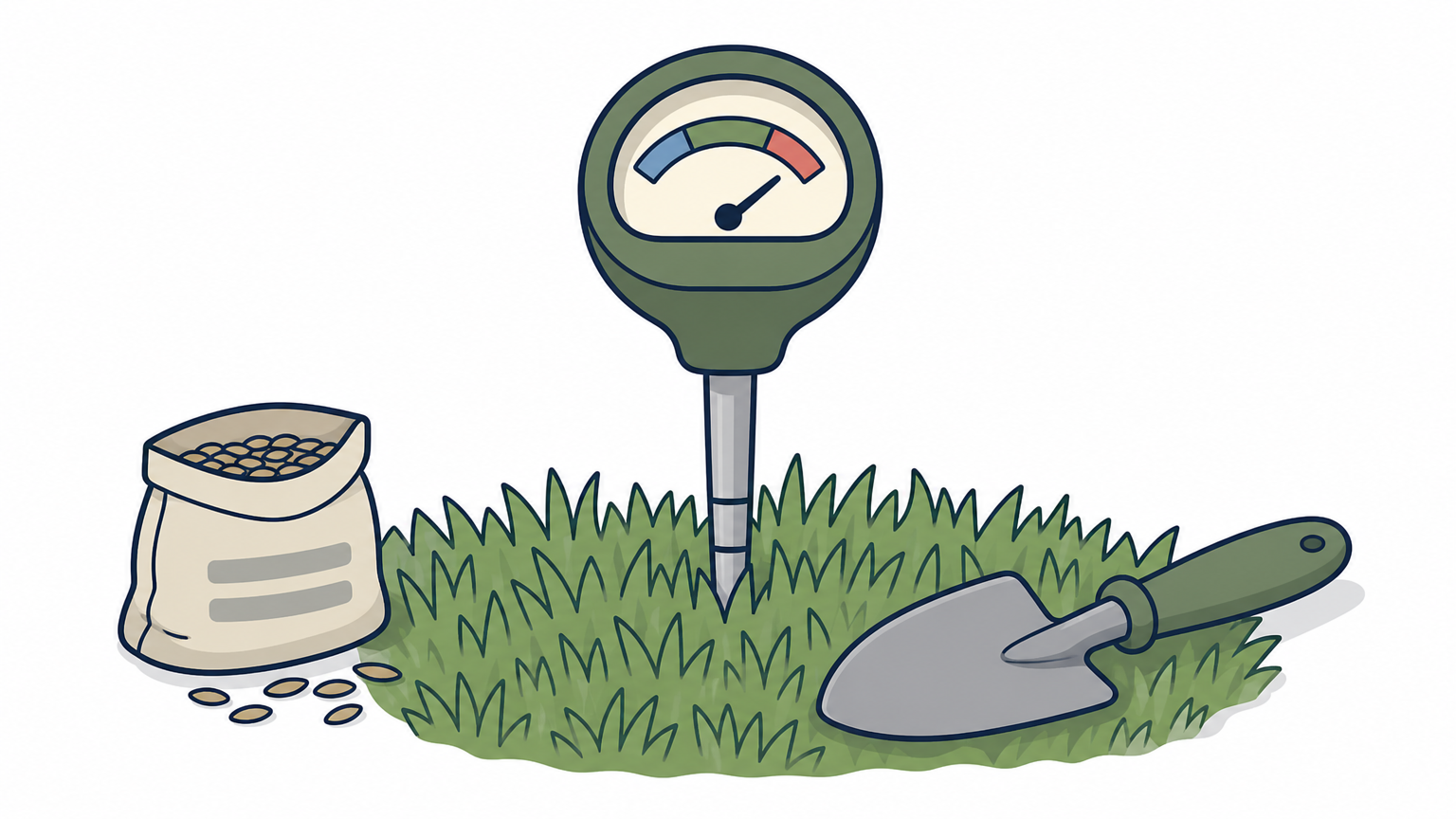
Use a soil thermometer pushed a few inches deep, and take readings in the morning. Aerate once the whole lawn is green and you have mowed it a couple of times. Seed once readings stay above roughly 65°F for several days in a row. In the Midlands, that usually lands between late April and May, but a cool spring can push it back.
Decide whether your lawn needs it
Aerate if a screwdriver will not push in more than an inch or two, water pools or runs off after rain, the turf is thin along walkways, or the yard has heavy clay. Skip it if the soil is loose and the grass is dense. A healthy lawn gains little from being punched full of holes.
Step 2. Prepare the lawn and the soil
Good preparation takes about a week and decides most of the result. Settle weed control first, then mow, water, and mark the yard.
Settle weed control before you seed
Pre-emergent herbicide and grass seed cannot share the same ground. If you put down a spring weed preventer in late winter, the barrier is still active and new seed will not sprout through it . Pick one goal per area. For patches you plan to seed, skip pre-emergent there. Do not use weed-and-feed products on the seeded area. A few herbicides are labeled for use at seeding, so read the label closely before you rely on one.
You cannot prevent weed seeds and sprout grass seed with the same treatment.
Aeration also punches through any barrier you have already laid down, so ask your applicator when to time the next application. If a lawn needs weed control and seeding in the same season, a plan from a lawn care company saves you from guessing. Our fertilization and weed control service picks each application based on grass type, soil health, and season.
Mow, water, and mark the yard
Mow one notch below your usual height and bag the clippings so seed reaches soil. Do not scalp Zoysia or Centipede. Water deeply a day or two before aerating, because moist soil gives you deep, clean cores , while dry clay stops the tines short. Then walk the yard and flag:
- Sprinkler heads and shallow irrigation lines
- Invisible pet fence wires and landscape lighting cables
- Septic covers, cleanouts, and shallow utility lines
If your lawn has never been soil tested, do it now. A test tells you whether lime or nutrients are needed, and it is cheaper to fix before seeding than after.
Step 3. Aerate, then overseed the same day
Aerate first, then overseed within the hour, so seed drops into fresh holes. Seeding into open holes gives seed direct soil contact, which is the main reason to pair the two jobs.
Aerate in two passes
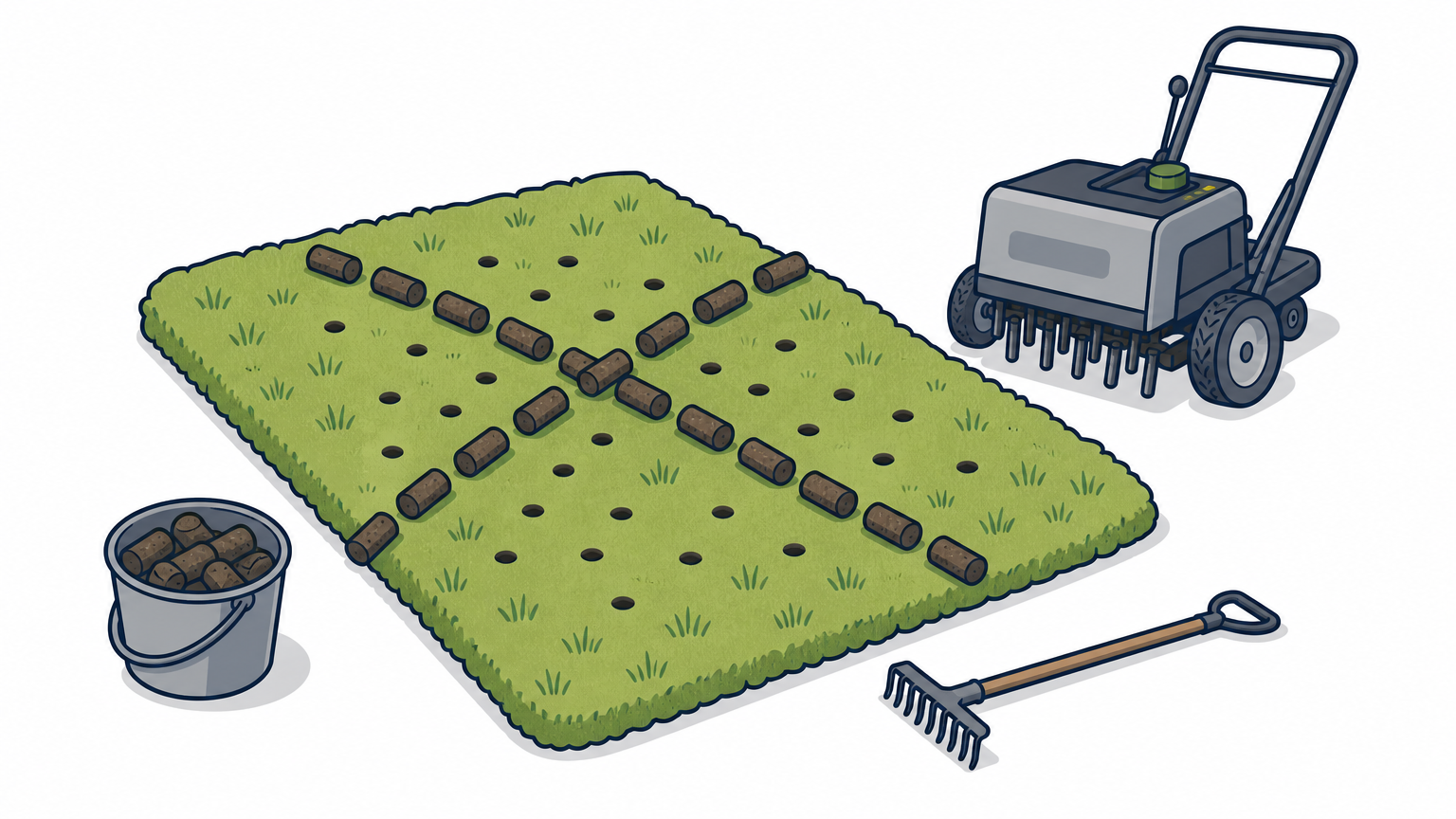
Use a core aerator , not a spike tool, since cores remove soil and spikes only compact the walls of each hole. Run the machine across the lawn, then make a second pass at a right angle. Holes should be roughly 2 to 3 inches deep and a few inches apart. Leave the plugs on the surface. They break down within a couple of weeks and return soil to the lawn.
Seed and feed
Spread seed with a broadcast or drop spreader, using the seed type your grass needs and the rate on the bag. Here is a quick example. Say your label gives 1 pound per 1,000 square feet. A 5,000 square foot lawn takes 5 pounds, while 500 square feet of patches takes half a pound. Read your own label, because rates vary by seed.
Follow with a starter fertilizer designed for new grass. That answers a common question: apply it after seeding, not before. Do not push heavy nitrogen on a warm-season lawn before it is fully green. Where clay is the problem, a thin layer of topsoil over the seeded area improves structure and holds moisture. It is best applied in early spring or autumn.
Aerate first and seed immediately after, while the holes are still open.
Do it yourself or hire a crew
A rented core aerator is heavy and slow on a large or sloped yard. Aeration is the easy part, and the bigger risk is the weeks of watering after it. Hiring makes sense for large lawns, badly compacted clay, or if you want timing and seed choice handled for you. Cost depends on lot size, access, and grass type, so ask for a quote based on your actual yard rather than a flat per-visit figure.
Step 4. Water and mow the new grass
New seed lives or dies on moisture. Keep the top inch of soil damp until seedlings emerge, then shift to deeper, less frequent watering.
Follow a watering schedule
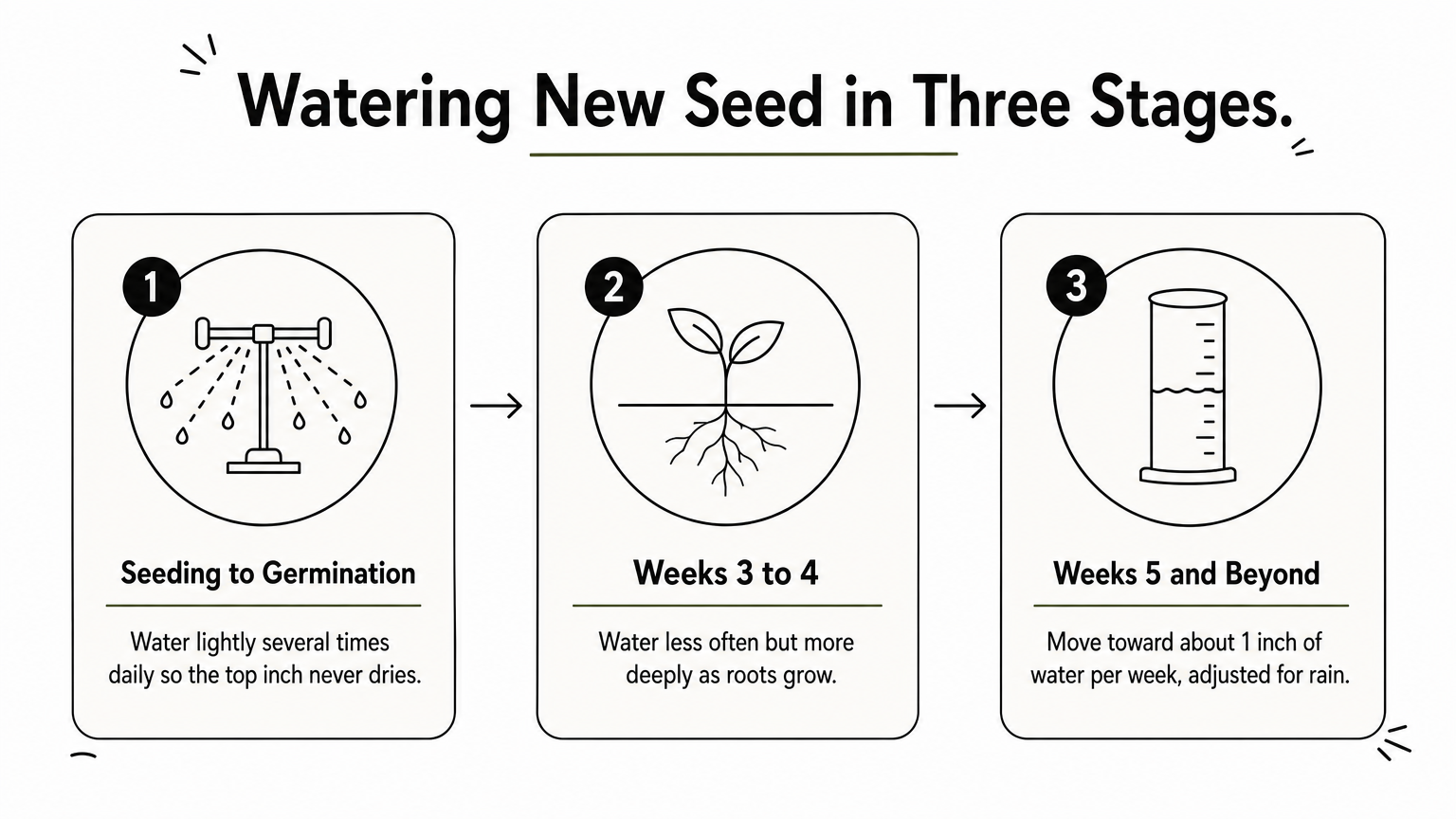
Aerated ground without seed needs less attention, but it still benefits from regular water. A seeded lawn follows this pattern:
| Stage | What to do |
|---|---|
| Seeding to germination | Water lightly several times a day so the top inch never dries out |
| After sprouting, weeks 3 to 4 | Water less often but more deeply as roots grow |
| Weeks 5 to 6 and later | Move toward about 1 inch of water per week, adjusted for rain |
Germination varies by species. Bermuda seed can sprout within one to two weeks in warm soil, while Centipede seed is slower and may take several weeks. Light watering also means avoiding pooling, which can wash seed into low spots. If you cannot water daily for the first three weeks, postpone seeding until you can.
Missing the first week of watering is the fastest way to waste a seeding.
Mow and feed carefully
Mow for the first time when the seedlings reach the normal mowing height for your grass. Use a sharp blade and never remove more than a third of the leaf at once. Keep foot traffic, pets, and heavy equipment off for the first several weeks. Hold off on broadleaf weed killers until the new grass has been mowed several times, and follow the label. A second fertilizer application a few weeks after seeding helps the grass build roots before it faces peak summer heat.
Making spring aeration work for your lawn
Spring aeration is worth doing on compacted warm-season lawns once they are fully green. Overseeding in spring is worth it for patches, when soil is warm, pre-emergent is off the table, and you can water daily. For whole-lawn thickening, fall is still the stronger season. Match the job to your grass, prepare the soil, aerate, seed within the hour, and keep the seedbed moist.
If you would rather hand it off, talk to Sparta Lawn Care about aeration and overseeding for your lawn. Our consistent crews know Midlands turf, and the Sparta Family Guarantee means we fix any service issue at no extra cost until you are satisfied.