Permanent Christmas Light Installation Cost: What You Pay
Permanent Christmas light installation cost is what you pay to have a controllable, year-round LED lighting system mounted on your roofline. A professional typically charges $20 to $35 per linear foot, and some quotes run from $15 up to $40. For most homes that means roughly $2,000 to $7,000 in total. DIY kits cost about $3 to $12 per foot, before ladders, power supplies and your own time. Unlike seasonal strings that you hang and take down every year, these lights stay up, and an app or controller handles colors and holiday scenes.
The spread between quotes confuses a lot of homeowners. One person pays $2,300 for a small house, and another hears $8,000 for a two-story home with several gables. The gap rarely comes from a trick. It comes from footage, roof shape and what the system includes. Sparta Lawn Care installs seasonal holiday lighting around Columbia and the Midlands, so this guide also shows when a seasonal setup makes more sense than a permanent one.
Below you'll see why the price deserves a closer look, how to estimate your own total, what moves the number, how DIY compares with hiring a pro, and what to ask before you accept a quote.
Why the cost of permanent lights deserves a closer look
A permanent system is a multi-year purchase, so you should judge it by cost per year of use, not by the invoice on day one. That changes how the price feels, and it exposes the trade-offs that a per-foot figure hides.
Upfront price versus yearly cost
Permanent lights front-load your spending . Divide the installed price by the years you expect the system to work. For example, 200 feet at $23 per foot is $4,600, or $460 a year over 10 years. If you now spend $400 a year on seasonal hanging, it would take about 11.5 years to break even.
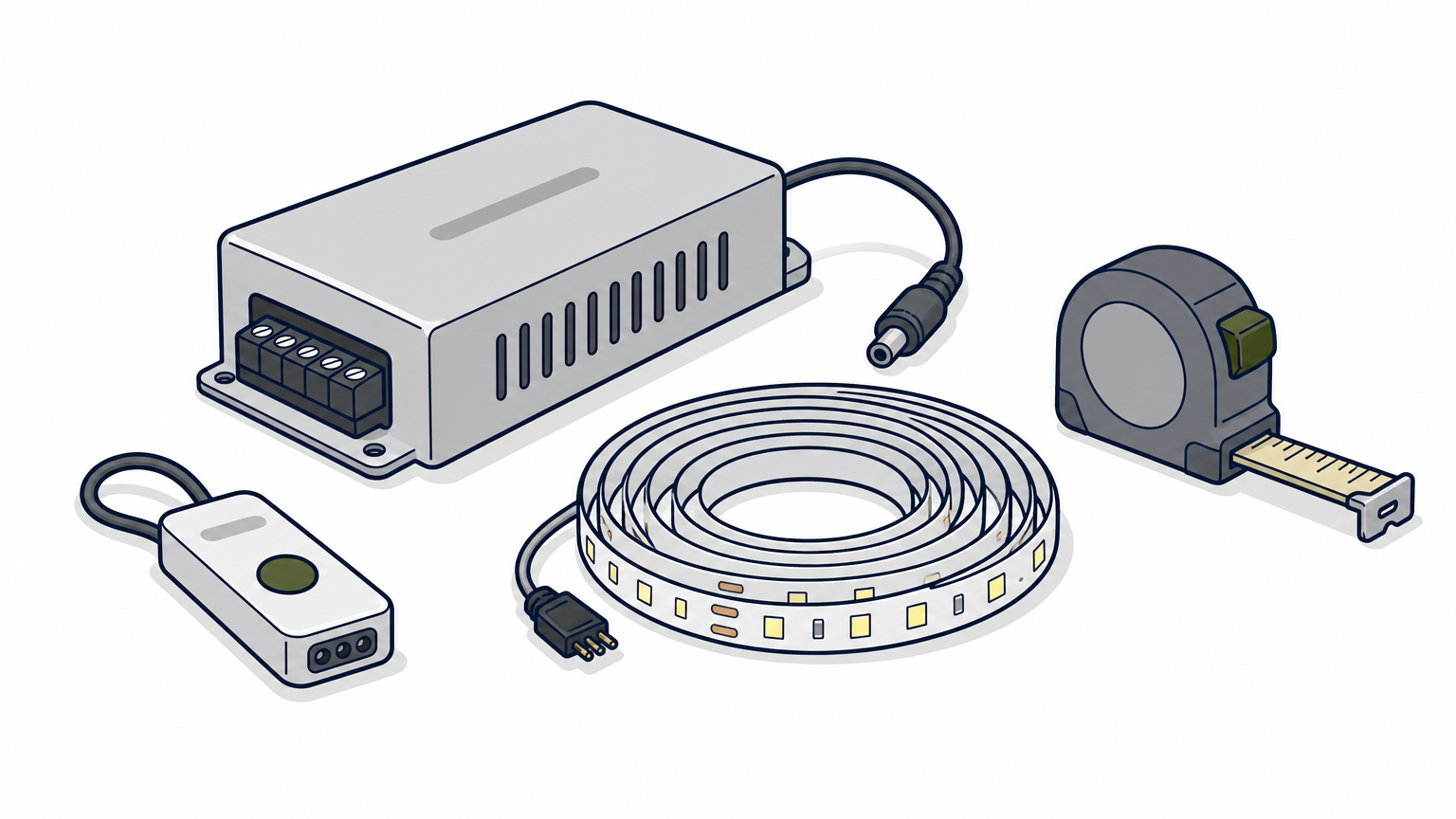
Ask each installer for the warranty length , because LED strips can outlast the controllers and power supplies that run them.
Judge permanent lights by cost per year of use, not by the day-one invoice.
Downsides and home value
The main downsides are the large upfront cost, controllers or power supplies that may fail before the lights do, and a layout that is hard to change once it is mounted. Your HOA may also have a say in exterior changes. Repairs usually mean a service visit, and a visit costs money.
On home value , don't count on a payback. Some buyers like the feature and others see a system they have to maintain. Treat permanent lights as a lifestyle upgrade, not a resale investment.
How to estimate your permanent Christmas light installation cost
Measure the linear feet of roofline you want lit, then multiply by the per-foot price. Installers price by length, not by the square footage of your home.
Measure and multiply
Two 2,000-square-foot houses can have very different roofline lengths, because gables and peaks add footage. Follow these steps:
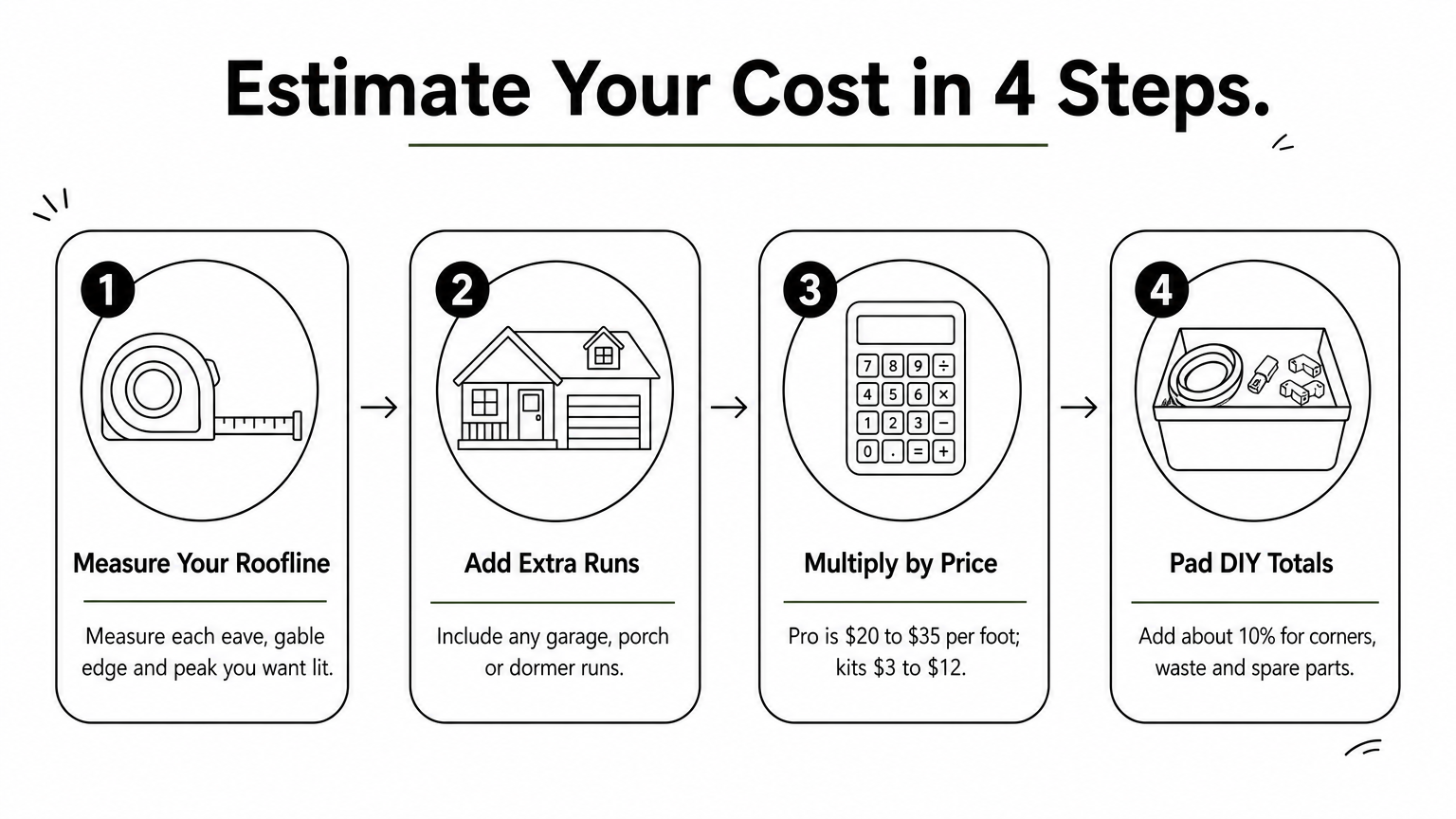
- Measure each eave, gable edge and peak you want lit, using a tape or the roof plans.
- Add any extra runs, such as a garage, porch or dormer.
- Multiply the total by $20 to $35 for a pro, or by $3 to $12 for a kit.
- For DIY, add about 10% for corners, waste and spare parts.
Totals by home size
These footage figures are rough and typical, so measure your own home before you rely on them.
| Home type | Roofline | Pro install ($20 to $35/ft) | DIY kit ($3 to $12/ft) |
|---|---|---|---|
| Small single-story | 100 ft | $2,000 to $3,500 | $300 to $1,200 |
| Mid-size single-story | 150 ft | $3,000 to $5,250 | $450 to $1,800 |
| Two-story with gables | 200 ft | $4,000 to $7,000 | $600 to $2,400 |
| Large custom home | 300 ft | $6,000 to $10,500 | $900 to $3,600 |
Take a 150-foot ranch. A pro at $25 per foot comes to $3,750 , while a mid-grade kit at $8 per foot comes to $1,200 plus supplies. If a company quotes $40 per foot, 200 feet can reach $8,000, so a high bid isn't automatically a mistake. It may reflect a premium system or a difficult roof.
What pushes your quote higher or lower
Footage sets the baseline. Roof complexity and system quality decide where you land in the range.
Roofline and home factors
Height and access matter most. A second story, a steep pitch or a roof that needs a lift all add labor. Many peaks and corners also add time, because each one needs cutting, connecting and sealing. Next, an installer needs power. If there is no outdoor outlet near the roofline, you may pay a licensed electrician to add one.
System and extras
The hardware behind the lights changes the price as much as the footage does:
- Light type: basic color-changing strips cost less than individually addressable pixel lights that run detailed effects.
- Controller and app: better controllers cost more, and some require a subscription.
- Extra zones: lights on trees, shrubs or a fence raise the total.
- Warranty: longer coverage usually shows up in the price.
Local conditions in the Midlands
Labor rates vary by market, so collect quotes from installers who work in your area, not national averages alone. South Carolina's hot, humid summers and heavy storms also matter. Ask about weather ratings, UV resistance, sealed connections and surge protection . Before work begins, check with your HOA and your city or county building department about approvals or permits for new electrical work.
Footage sets the baseline, and roof complexity and system quality decide where in the range you land.
DIY versus professional installation
DIY costs far less upfront, but a pro includes the labor, the warranty and the ladder risk. Which one wins depends on your house and your comfort working at height.
Cost and risk side by side
| Factor | DIY | Professional |
|---|---|---|
| Upfront cost | $3 to $12 per foot | $20 to $35 per foot typical |
| Labor | Your own weekends | Included |
| Extras | Ladder, hardware, extra power supplies | Usually bundled, so confirm |
| Warranty | Manufacturer only | May cover install and repairs, so confirm |
| Safety risk | You carry it | Installer's insurance should cover it |
| Layout | You plan and measure | Designed around your roofline |
When each option makes sense
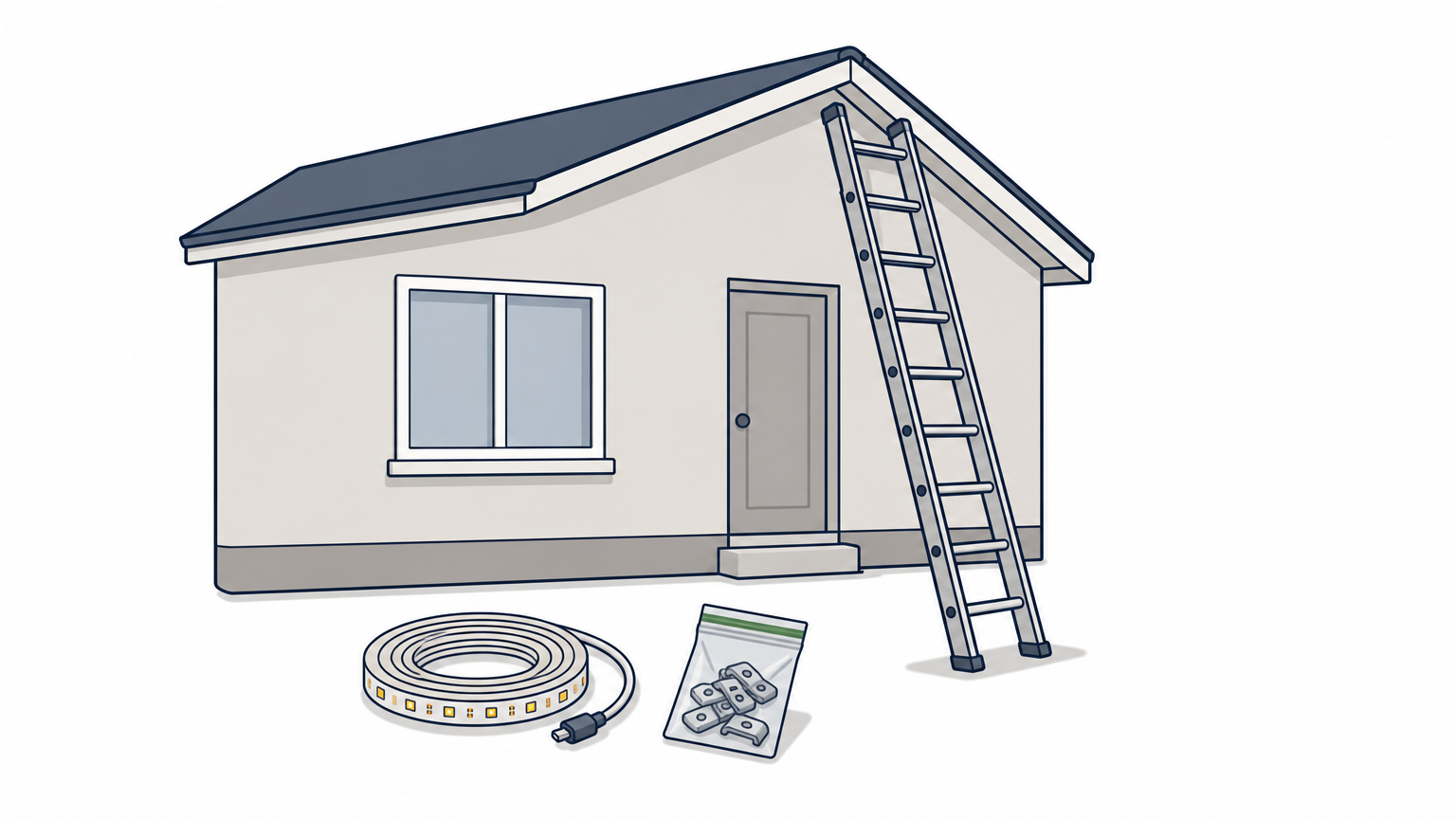
DIY works best on a single-story home with reachable eaves, when you are comfortable with low-voltage connections. Hire a pro for a two-story house, a steep roof, or any job where you want one company responsible for the result. Ladder falls are a common cause of holiday decorating injuries.
Leave line-voltage work, such as a new outlet, to a licensed electrician in either case.
If the work needs more than a ladder on one story, the savings from DIY rarely cover the risk.
How to get quotes you can compare
You can only compare quotes that state footage, inclusions and warranty in writing. Gather at least three, and make each installer answer the same questions.
Questions to ask every installer
- Is the price per foot or a flat total, and how many feet does it cover?
- What is included: lights, controller, power supplies, app and design?
- How long is the warranty, and who handles a failed section?
- Are you licensed and insured , and can you share references?
- Who handles outlets, permits and any HOA paperwork?
- What do repairs, removal or later changes cost?
When seasonal lighting is the better fit
If the totals feel too high, seasonal lighting spreads the cost across years and lets you change the design every December. Sparta Lawn Care's Holiday Light Installation covers design, installation and removal after the season, using commercial-grade LED lights. Its Lighting Removal & Storage service cleans, labels and stores the lights in a dry, safe location until next year.
A quote is comparable only when it lists footage, inclusions and warranty in writing.
Budgeting for lights that stay up
Expect to pay about $20 to $35 per foot for professional installation, or $3 to $12 per foot for DIY kits. Measure your roofline, multiply, and add the factors that apply to your home. Then divide the total by the years you expect the system to last, and compare that figure with what you spend on seasonal lighting now.
Written quotes that spell out footage, equipment and warranty make the comparison fair. If a permanent system is more than you want to commit to, you can still have a clean, well-planned display each year. See how Sparta Lawn Care handles holiday lighting for homes and businesses in the Midlands.