

Lawn Mowing Service Prices near Me: 7 Benchmarks to Know
If you are searching for lawn mowing service prices near me , expect $30 to $50 per cut for a standard suburban lot, or $40 to $80 per hour , based on national cost guides. A half-acre runs about $50, a full acre about $100, and an overgrown yard starts near $70. A flat per-cut rate suits most homeowners with a regular lot. Hourly billing suits odd-shaped or overgrown yards, and a monthly plan suits anyone who wants a predictable bill.
The trouble is that most quotes arrive as one number with no context. $45 can be a bargain on a half-acre and too much for a 6,000 square foot yard. This article gives you seven benchmarks. Each one shows a typical price, what pushes it up or down, and who it fits. After that, you get a short method for testing any quote before you say yes.
The figures are national benchmarks, so treat them as a yardstick, not a local price list. Labor costs and grass type shift the final number in Columbia, Blythewood, Elgin and the rest of the Midlands. At Sparta Lawn Care, we have more than 20 years of experience mowing lawns here, and the examples below reflect how those lawns actually grow.
1. Flat per-cut rate for a standard lot
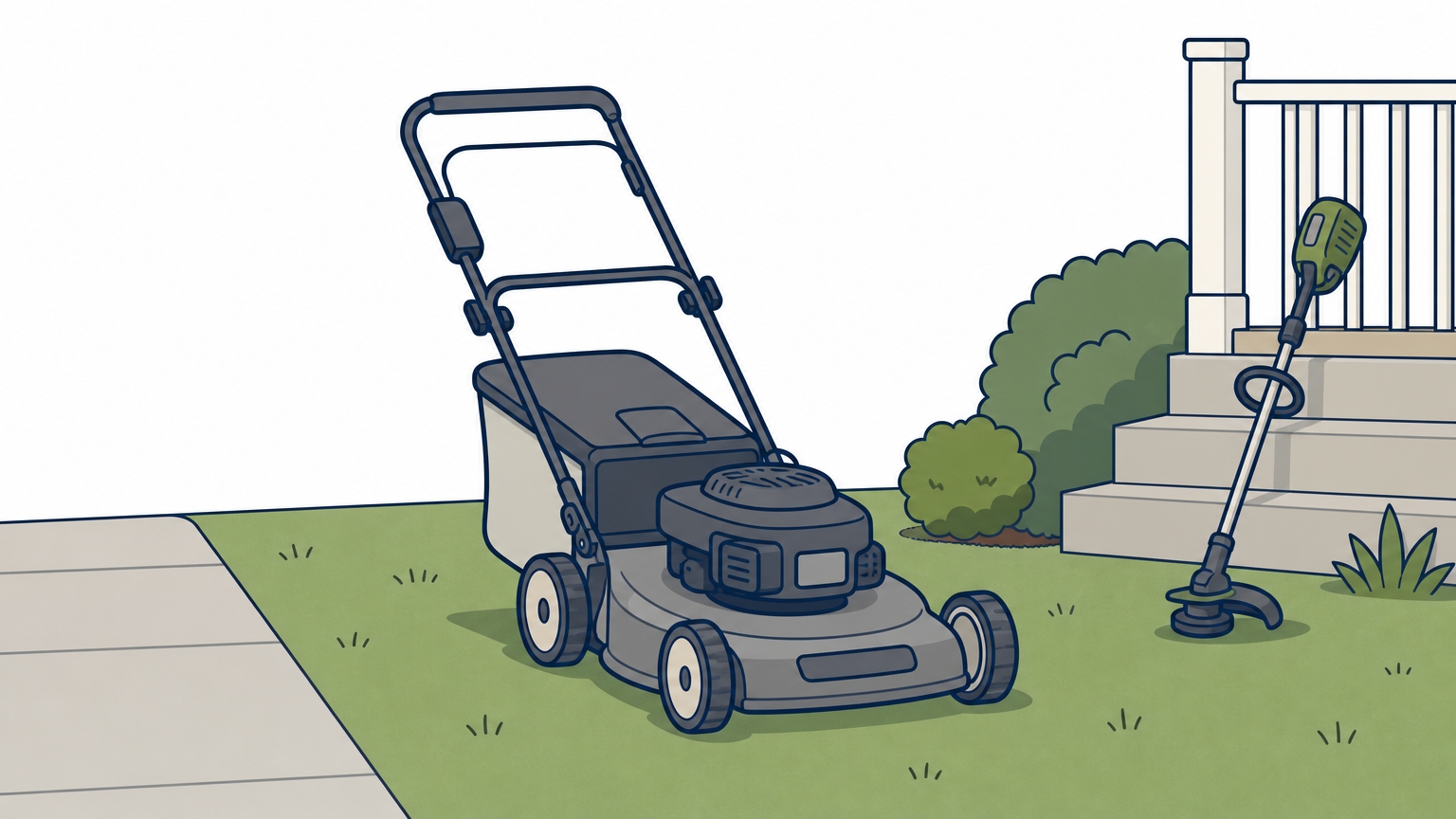
A flat per-cut rate is the most common way to buy mowing, and national guides put it at $30 to $50 for a typical suburban lot. It is a fixed price per visit, no matter how long the crew takes.
Typical price
Most homeowners pay $30 to $50 per cut . Small subdivision lots sit near the bottom of that range, and a half-acre sits at the top. The flat rate normally covers mowing, string trimming, edging, and blowing clippings off the driveway and sidewalks.
- Small subdivision lot: about $35
- Property up to 8,000 square feet on weekly service: about $30
- Quarter-acre or smaller yard: $30 to $85, depending on the market and the crew
- Half-acre lot: about $50
Is $50 a good price? It is fair for a half-acre or for a quarter-acre with slopes and lots of obstacles. It is high for a flat 6,000 square foot lot, where $30 to $40 is the more usual figure.
A flat per-cut price is fair when it matches your mowable turf and the quote names trimming, edging and blowing.
What moves the number
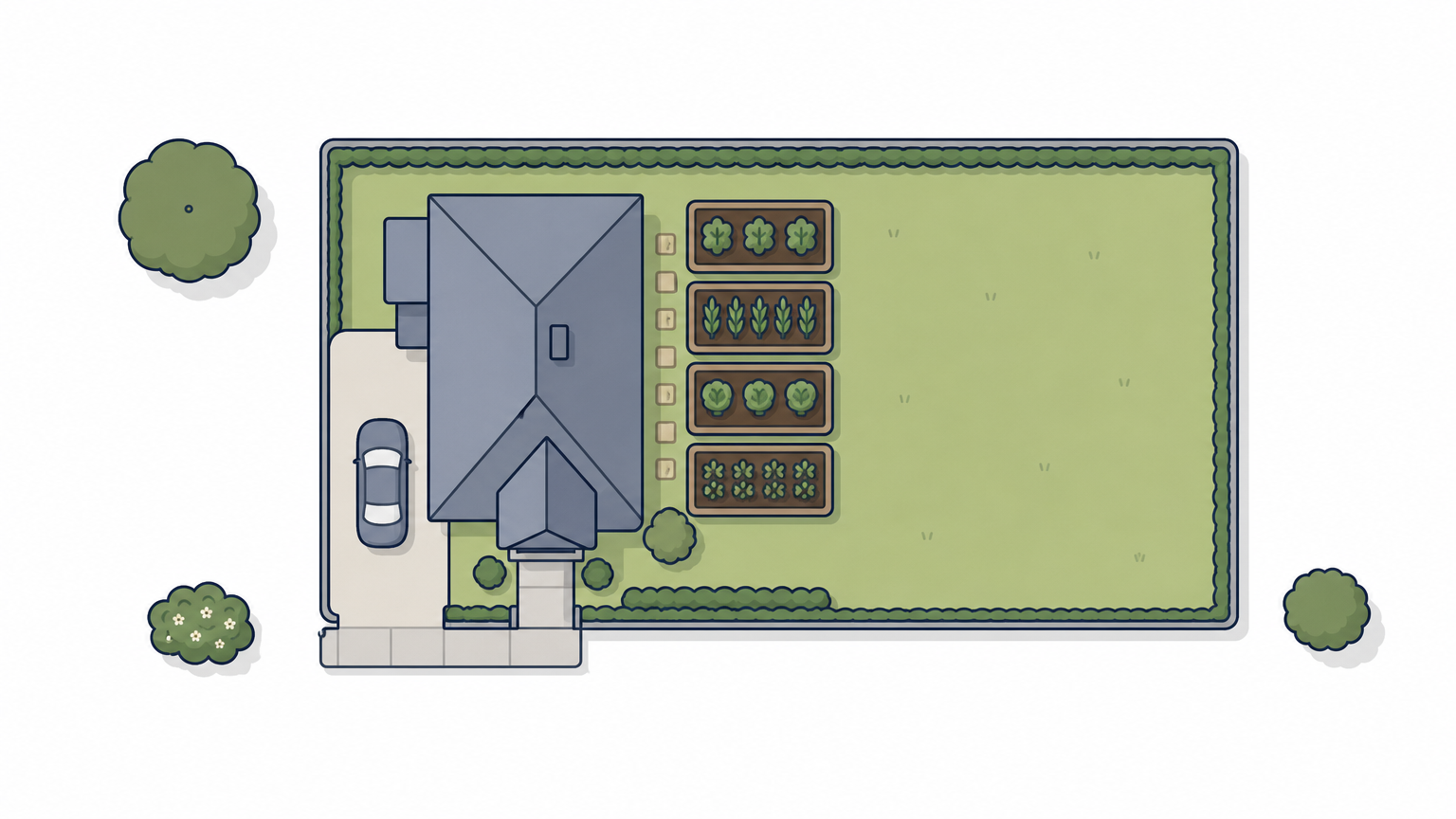
The biggest factor is mowable turf , not the size of your property. The house, driveway and planting beds do not get mowed. Slopes, gates, fenced backyards and trees also slow a crew, and slower work costs more.
Grass type affects your schedule more than your rate. Bermuda grows fast through summer, so weekly service is the norm from late spring to early fall. Centipede grows more slowly and can tolerate a longer interval between cuts. Zoysia falls in between. Our team works on all three, and we mention them because the type of grass in your yard decides how many cuts you will buy per year.
When it fits
A flat rate suits a regular, accessible lot where the work is predictable. Take a 10,000 square foot lot at $35 per cut. Weekly service means four cuts and $140 for the month .
Skip the flat rate if the lot is oddly shaped, heavily landscaped, or very overgrown. Hourly billing, covered next, is usually the better fit for those jobs.
2. Hourly rate for mowing crews
Hourly billing charges for the time on your property, and national guides put lawn mowing at $40 to $80 per hour. Some low-cost solo operators quote closer to $25 per hour with travel and equipment included.
Typical price
The spread from $25 to $80 reflects crew size, equipment and insurance. A solo worker with a basic mower sits at the low end. A two-person crew with commercial equipment tends to land in the upper half of the range.
Here is what that looks like in dollars:
- 45 minutes at $60 per hour: $45
- 1 hour at $40 per hour: $40
- 2 hours at $40 to $80 per hour: $80 to $160
That last line answers a common question. Two hours of mowing at typical rates costs $80 to $160 , depending on who shows up and what they bring.
What moves the number
The rate is only half of the price. The other half is how long the crew takes. At $60 per hour, a 30-minute job costs $30 and a 60-minute job costs $60. Ask for an estimated time before the first visit, and ask what happens if the job runs long.
Also ask what the rate includes. Some providers fold travel and equipment into the hourly number. Others add a trip charge or set a minimum visit fee. Those extras can turn a $40 quote into a $55 invoice.
When it fits
Hourly pricing works for jobs that do not fit a flat rate: a yard with many beds, a mow combined with hedge trimming, or a one-off cleanup. It is also the honest way to price a property with no clear boundaries.
For a plain lot, a flat per-cut rate is easier to budget. You know the cost before the crew arrives, and you are not paying for a slow day.
Hourly pricing only works in your favor when the time estimate is as clear as the rate.
3. Price by lot size and acreage
Lot size is the single best predictor of what a mowing service will charge, and quotes scale roughly with square footage. National guides show about $30 per weekly cut at the small end and $100 for a full acre.
Typical price
The table below combines the weekly rates for typical suburban lots with the rates for larger parcels.
| Lot size | Square feet | Typical price per cut |
|---|---|---|
| Up to 8,000 sq ft | 8,000 or less | About $30 (weekly) |
| Mid-size lot | 8,001 to 15,000 | About $35 (weekly) |
| Larger lot | 15,001 to 20,000 | About $40 (weekly) |
| Half-acre | About 21,780 | About $50 |
| One acre | 43,560 | About $100 |
Price does not climb in a straight line. A half-acre costs about $50 and a full acre about $100, so doubling the turf roughly doubles the cut. At the small end, the minimum a crew will drive out for sets a floor near $30.
What moves the number
Providers price on square footage of turf , which covers their time, their equipment and the fuel to run it. Most also charge more if you live outside their normal service range, so a lot at the edge of the Midlands may carry a travel fee.
Here is the mistake to avoid: comparing a quote to your total lot size. A 0.25-acre lot is about 10,890 square feet. If the house, driveway and beds cover 3,500 square feet, you have roughly 7,400 square feet of grass. That falls in the first tier at about $30, not the mid-size tier at $35.
When it fits
Use lot size as your first sanity check on any quote. Look up your lot size in county property records, subtract the hard surfaces and beds, and find your row in the table. A quote that falls well outside your row needs an explanation.
This method works best for rectangular lots with simple access. For steep, cluttered or irregular properties, expect a higher price within the same tier.
Judge any quote against your mowable turf, not your lot size.
4. Weekly, every-other-week and one-time pricing
How often you mow changes the price per visit as much as the size of your lawn does. Less frequent service costs more per cut but less per month. For a lot up to 8,000 square feet, national figures run about $30 weekly, $40 every other week, and $45 for a single visit.
Typical price
| Schedule | Price per visit | Visits per month | Monthly cost |
|---|---|---|---|
| Weekly | $30 | 4 | $120 |
| Every other week | $40 | 2 | $80 |
| One time | $45 | 1 | $45 |
Every-other-week service saves you $40 per month, but each cut costs a third more than a weekly one. The reason is simple. Longer grass takes more time to cut, and it clogs the mower.
What moves the number
The one-third rule explains most of the gap. Never remove more than one-third of the grass blade in a single mowing. If you keep a lawn at 2 inches, cut it when it reaches 3 inches. Cutting deeper stresses the grass and weakens the roots.
In Columbia, peak summer growth makes this matter. Bermuda can outgrow a two-week interval in July, so a crew has to cut it in two passes or accept a scalped lawn. Either way, you pay for the extra work. Spring and fall growth is slower, so a longer interval is fine then.
When it fits
Weekly service suits the heart of the growing season, roughly late spring through early fall. Every-other-week service is a reasonable budget move in the cooler shoulder months, or all year on slow-growing lawns that are kept a little taller.
One-time service fits a vacation, a broken mower, or a house you are about to list. It costs the most per visit, but you owe nothing afterward.
Cutting less often lowers your monthly bill but raises the price of every cut.
5. One-time mowing of an overgrown lawn
An overgrown lawn costs more than a routine cut, and national guides start the price of a one-time mow or an overgrown yard around $70. The extra charge pays for a slower, rougher first visit.
Typical price
Expect $70 or more for the first cut of a yard that has gone well past its normal height. The final figure depends on lot size, how tall the grass is, and how much debris is in it.
Take a lot that normally costs $35 per weekly cut. The overgrown first visit might price at $70 or more, then drop back to $35 once the lawn is under control. Ask whether the provider credits the extra charge if you sign up for recurring service afterward.
What moves the number
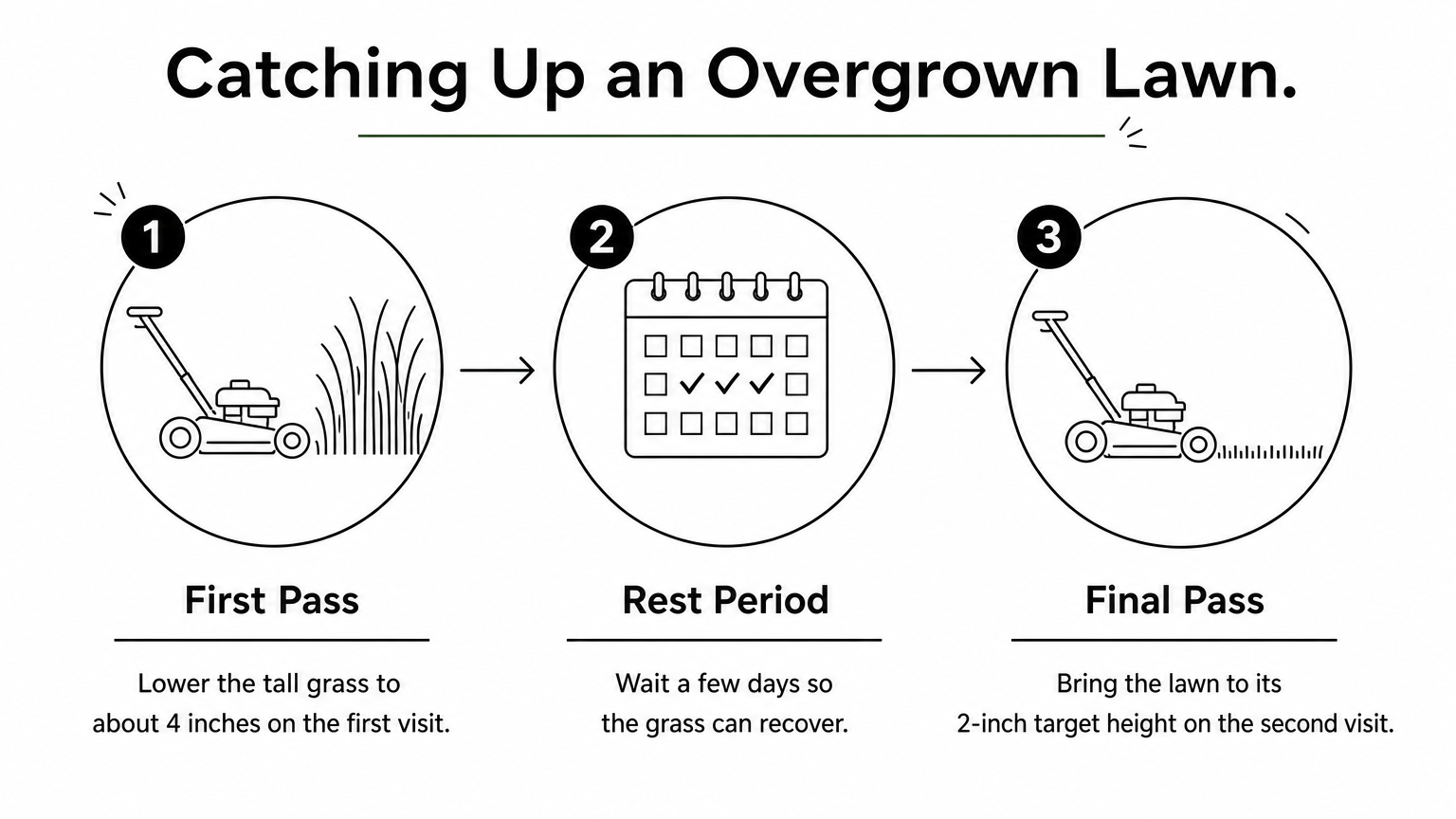
Height drives the price. A lawn that should sit at 2 inches but has reached 6 cannot be cut back in one pass without harming the grass, so a good crew cuts in stages . They might bring it down to about 4 inches, then return a few days later to reach the target height. Some providers bundle both passes in one quote, and others bill each visit.
Debris is the second driver. Sticks, toys, hoses and dumped branches slow the work and can damage blades. Walk the yard before the crew arrives and clear what you can. In Columbia, a few weeks of summer rain and heat is all it takes for Bermuda to reach this stage, so a missed month in July costs more than a missed month in January.
When it fits
Pay the overgrown rate if you are catching up after a trip, an illness, or a property you just bought. It is a one-time cost, and the staged approach protects the grass.
If a quote for an overgrown lawn looks like a bargain, ask whether it covers one pass or two. A single deep cut on tall grass is cheap for the provider and hard on your lawn.
An overgrown lawn costs more because it takes more passes, not because the crew is padding the bill.
6. Add-ons beyond the basic cut
Add-on services are priced separately from mowing, and the quote should say clearly which ones are included. A standard cut usually covers trimming, edging and blowing, while aeration, fertilization and bagging are extras.
Typical price
Use this table to separate what is normally included from what you pay for on top.
| Service | Typical price | Notes |
|---|---|---|
| Trimming, edging, blowing | Usually included in the cut | Confirm it in writing |
| Aeration | $70 to $100 national average | Ask when to aerate for your grass type |
| Fertilization | Under $50 to over $200 | Depends on lawn size |
| Bundled lawn care program | $60 to $90 per month (1,000 to 2,500 sq ft); $110 to $150 per month (5,000 sq ft or more) | Includes weeding, cleanups and minor irrigation repair |
| Bagging and hauling clippings | Quoted per job | Not part of a standard cut |
What moves the number
Size drives add-on pricing the same way it drives mowing. A fertilizer application on a small yard can come in under $50, while the same service on a large lot can run past $200. Programs that bundle several services trade a lower monthly price for less flexibility.
Check the line between mowing and everything else. Some providers advertise a low per-cut rate and then charge separately for edging or blowing. That makes their cut look cheaper than a competitor who includes everything.
When it fits
Add-ons make sense when your lawn needs more than mowing. Thin turf, weeds and compacted soil respond to fertilization, weed control, aeration and overseeding, and one provider doing both mowing and treatment simplifies scheduling.
If your lawn is healthy, stick with the basic cut and skip the upsell. Thick, regularly mowed turf already resists weeds, pests and stress better than a thin one.
A low per-cut rate means little until you know which tasks are left out of it.
7. Monthly and seasonal mowing plans
A monthly or seasonal plan converts per-cut pricing into one predictable bill, and national figures run about $120 per month for lots up to 8,000 square feet. Whether it saves you money depends on how the plan handles the winter.
Typical price
Weekly service on typical suburban lots works out like this:
- Up to 8,000 square feet: $30 per week, or about $120 per month
- 8,001 to 15,000 square feet: $35 per week, or about $140 per month
- 15,001 to 20,000 square feet: $40 per week, or about $160 per month
Here is a worked example for a 10,000 square foot lot at $35 per weekly cut. A season of 30 weekly cuts, roughly April through October, comes to $1,050 . Spread over 12 months, that is $87.50 per month. Billed over the seven mowing months only, it is $150 per month.
What moves the number
How the provider spreads the cost matters. In Columbia, Bermuda, Zoysia and Centipede are warm-season grasses that slow down and go dormant in winter, so a lawn needs far fewer cuts from roughly December through February. A plan that bills the same amount every month of the year averages out the cost. A plan that bills only during the mowing season charges more per month but nothing in the off-season.
Ask which one you are getting before you sign. Also ask how skipped weeks are handled. A week of drought or a rain-out should not leave you paying for a cut that did not happen.
When it fits
A monthly plan suits homeowners who want a fixed line in the budget and do not want to approve each visit. It also suits HOA boards and property managers, who need predictable costs for common areas.
If your lawn is small or you only need occasional cuts, pay per visit. You will not gain much from a plan, and you keep the freedom to switch providers.
The right plan is the one that tells you in advance what you pay in July and what you pay in January.
How to check a lawn mowing quote before you hire
To check a lawn mowing quote, measure your mowable turf, find your tier in the lot-size table, and confirm exactly what the price includes. Then compare at least three quotes for the same scope of work.
Test the quote against the benchmarks
Work through these steps in order:
- Measure your mowable turf. Use county property records for lot size, then subtract the house, driveway and beds.
- Find your tier. Match your turf to the table in benchmark 3 and note the typical per-cut price.
- Confirm what is included. Trimming, edging and blowing should be named in the quote.
- Confirm the schedule. Ask how often visits happen in peak growth and how rain delays are handled.
- Compare three quotes. Make sure all three cover the same tasks on the same schedule.
A quote far below the range deserves a question about insurance and what is left out. A quote far above it deserves a question about what extra work is included.
Questions to ask every provider
These questions separate a dependable provider from a risky one:
- Are you licensed and insured, and can you show proof?
- Do you bill per cut, hourly or monthly?
- Are trimming, edging and blowing included?
- Is there a minimum charge or a travel fee?
- Will the same crew come each visit?
- What happens if I am not happy with the work?
- How do I pay?
Where Sparta Lawn Care fits
Sparta Lawn Care is a veteran-owned, locally owned company serving residential lawns, commercial properties and HOA common areas in Columbia, Blythewood, Elgin and the surrounding Midlands. We are licensed and insured. We work with Bermuda, Zoysia and Centipede lawns, and each property gets the same familiar crew.
Price depends on your lot, your grass and your schedule, so the practical step is to ask for a quote for your address. You can reach the office by phone or text at (803) 261-1485, Monday to Friday, 8:30am to 5:00pm. Payment is online by credit card through our secure client hub, and the Sparta Family Guarantee means we come back and fix any service issue at no additional cost until you are satisfied.
Treat every quote as a checklist exercise: price, scope, schedule, insurance and what happens if something goes wrong.
Know the range, then get a real quote
Lawn mowing service prices near you come down to a handful of numbers. Plan on $30 to $50 per cut for a standard lot, $40 to $80 per hour, about $50 for a half-acre, and $70 or more for an overgrown first cut. Weekly service costs less per visit than every-other-week service, and add-ons like aeration and fertilization are priced separately. A monthly plan only helps if you know how it treats the winter.
Use those benchmarks to measure your mowable turf, find your tier, and compare quotes for the same scope. The best price is the one that matches your lot, names every task it covers, and comes from an insured provider who stands behind the work.
If you want a number for your own yard, see how Sparta Lawn Care handles lawn mowing in Columbia and the Midlands and ask for a quote.